Update 4:15PM: We’ve heard from some communities that they’re disappointed not to have been selected for our initial build. So just to reiterate what I've said many times in interviews: we're so thrilled by the interest we've generated—today is the start, not the end the project. And over the coming months, we'll be talking to other interested cities about the possibility of us bringing ultra high-speed broadband to their communities.
New imagery of Japan after the earthquake
(Cross-posted from the Lat Long Blog)
It’s now the third week after the devastating 9.0-magnitude earthquake that struck northeastern Japan. Aid organizations have been hard at work and cities are starting to show signs of recovery, but the damage is beyond imagination and there are still thousands of people at shelters grappling with daily challenges. As a native of Sendai city, I’m still speechless seeing the destruction and damage that has been done to the places I love and care about.
We’ve been looking for ways we can assist in the relief efforts using Google’s map-related tools. A few days after the quake, we published updated satellite imagery of northeast Japan in Google Maps and Google Earth, which illustrated the massive scale of devastation in the affected areas.
Today, we’ve published imagery of the Sendai region at even higher resolution, which we collected on Sunday and Monday. The new Sendai imagery, along with satellite imagery from throughout the area, is now live in the base imagery layer of Google Earth and will soon be visible in Google Maps. We hope to continue collecting updated images and publishing them as soon as they are ready.
We hope our effort to deliver up-to-date imagery provides the relief organizations and volunteers working around the clock with the data they need to better understand the current conditions on the ground. We also hope these tools help our millions of users—both those in Japan and those closely watching and sending their support from all over the globe—to find useful information about the affected areas.

A riverside neighborhood in Sendai from our newly released imagery
Gathering data from within Cuba
He told me that domestic email and Web pages can be accessed from all locations. International email is blocked at the Youth Computer Clubs (YCCs) and some work places. He said there is no international web access at the YCCs, and Web sites are filtered at other locations. (See Table 6 in the report). Of course this is anecdotal -- only one person's experience. (Have you had a different experience in Cuba)?
Can we get better data using a survey? I don't know if we can get much response, but let's try one.
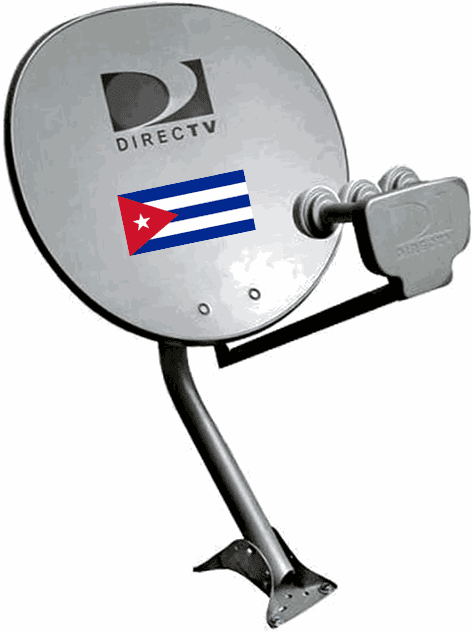
Several comments in a previous post on Alan Gross said that many people in Cuba have illegal access to Direct TV, a popular satellite television service for US homes. Underground TV might be more important than underground Internet access. To learn a little more, I set up a two-minute survey on illegal TV in Cuba in English and in Spanish.
If you are in Cuba or have been there recently, please complete the anonymous survey.
Also, since many people do not have Web access, please forward the following versions to others using email:
I do not think many people read this blog, but perhaps we can spread the survey by sending it to others and asking them to pass it around.
I will post a summary of whatever results we have in one month.
Cuba needs a domestic upgrade to utilize the ALBA cable. Will China help?
 |
| Commemorating 50 years of Cuba-China relations |
When complete, the cable will increase the speed of Cuba's international connectivity dramatically, but, what of the physical and human infrastructure needed to capitalize on that increase? Cuba's domestic network and the people and organizations that operate it have been working with low-speed, high-latency international connectivity. They are, to a great extent, living in the dial-up access era.
To utilize the capacity of the new cable, they will have to upgrade equipment, organizations, and worker skills. If they do not, the cable will be of limited value -- a strong link in a weak chain.
The Ministry of Informatics and Communications (MIC) and others in Cuba must have plans and programs for upgrading the physical and organizational Internet infrastructure.
For example, we discussed Cuban computer science education in our report, with some focus on the relatively new University of Informatics Science (UCI). UCI places major emphasis on practical work along with education -- I expect (hope) that they are involved in both training for and implementing a strategic upgrade of the domestic network.
In January 2011, MIC was reorganized and later in the month Cuba purchased Telecom Italia's 27 percent share of ETECSA. These moves may indicate a strategic shift toward support of a new domestic network.
But, what of the funding? It was reported that it cost $706 million to buy Telecom Italia out. Those funds are no longer available for domestic network upgrades, but might China play a role in modernizing Cuba's domestic Internet?
Cuba was the first Latin American nation to establish diplomatic relations with China in 1960. At a fifty-year commemoration ceremony, the Chinese pledged to "provide assistance to Cuba to help its social and economic development."
Like the US before it, China has made many investments in developing nations, and they have already participated in the undersea cable project. China has extensive experience building Internet infrastructure at home and to a lesser extent in Africa and other parts of the world. Furthermore, Huawei, a Chinese company, has emerged as a major manufacturer and exporter of Internet equipment.
How will Cuba upgrade its physical and organizational infrastructure to take advantage of the new undersea cable and what will be China's role in developing the domestic Internet in Cuba? Is there a Cuban IT plan?
My speculation on China should be qualified by the fact that according to a Wikileaked diplomatic memo Cuba-China trade volume fell with the current economic crisis and China is somewhat disillusioned with Cuban finance.
There has been speculation that Cuba is looking for a new foreign partner, perhaps to finance new domestic infrastructure.
Subscribe to:
Posts (Atom)